Our Location
304 North Cardinal St.
Dorchester Center, MA 02124
Original price was: $43.33.$12.99Current price is: $12.99.
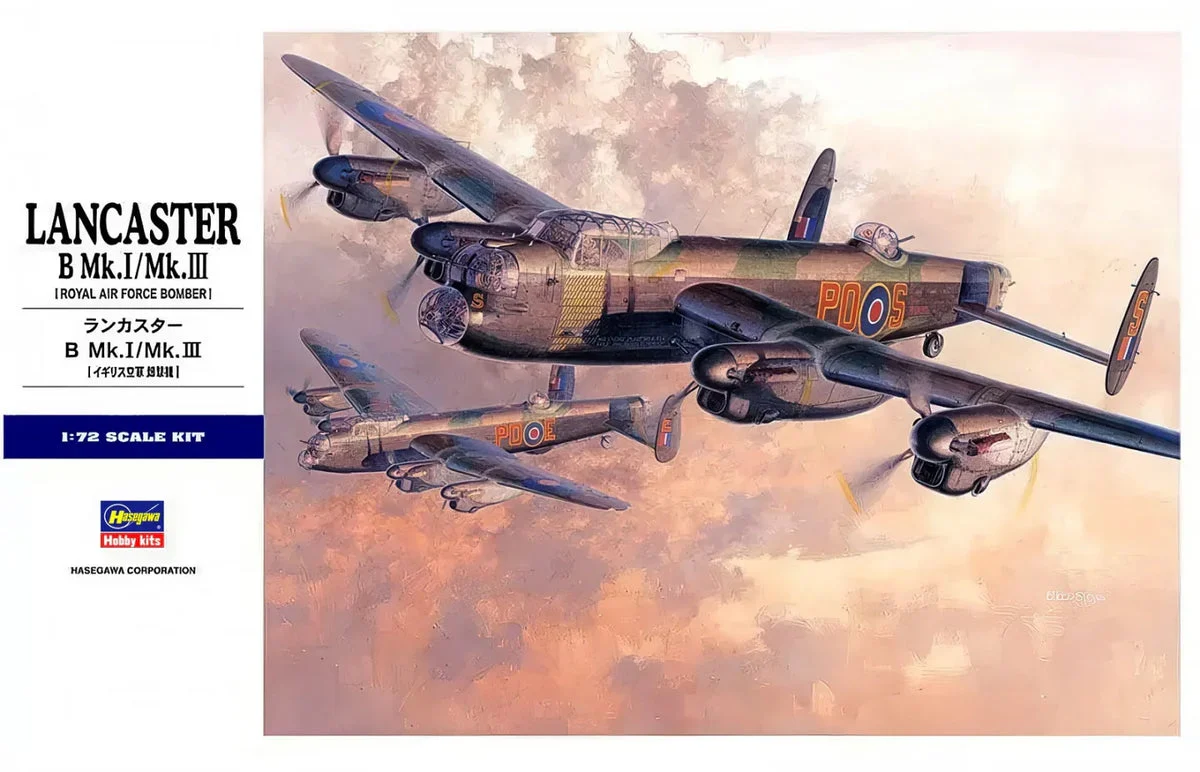
In 1936, the British Air Ministry, anticipating future needs, drew up specifications for a new bomber. Based on these specifications, Avro proposed an aircraft designated as “Type 679.”
This aircraft was a twin-engine bomber equipped with Rolls-Royce’s new 24-cylinder X-type Vulture engines, and it was named the “Manchester.” It rolled out in 1940, and squadron deployment began shortly thereafter.
However, the Manchester was only in service for about a year and a half, as it suffered from issues with both its engines and propellers, preventing effective operation. To address these problems, a plan emerged to:
This modified version was initially called the “Manchester III”, but it eventually became the prototype of the famous and highly successful Avro Lancaster.
In 1941, the test flight of the first Lancaster prototype was a major success, and as a result, all remaining Manchester production plans were shifted to the Lancaster. The initial production model, the Lancaster Mk.I, was equipped with Merlin XX engines. As production continued, upgrades followed with Merlin 22 and Merlin 24 engines.
To prepare for a possible shortage of Merlin engines due to the large volume of orders, the production of the Mk.II variant, which used Bristol Hercules 18-cylinder air-cooled radial engines, was also considered.
However, due to America’s entry into the war, large quantities of Packard-built (licensed) Merlin engines became available. As a result, only 300 units of the Mk.II were produced. Lancasters fitted with Packard Merlin engines were designated as Mk.III.
The Lancaster’s fuselage was originally designed to allow gun turrets to be mounted on the dorsal (top) and ventral (bottom) positions, but the ventral turret was later eliminated.
Three Fraser-Nash hydraulic-powered turrets were mounted on the nose, dorsal, and tail positions, each equipped with 7.7mm Browning machine guns.
The bomb bay was very large, measuring 10.05 meters in length, and capable of carrying a 4,000 lb (1,614 kg) bomb.
Kit Description:
Bomb parts include:
Decals (Markings Included):

Reviews
There are no reviews yet.